Thứ Năm, 31 tháng 3, 2016

Acting On Your Moments: Five ways to go from knowing your users' moments to winning them

This is the third in our series of posts about micro- and macro-moments. In parts one and two we talked about how to think about these moments of intent and find out what they are for your audience. Today let's talk about what to do about it.

1) A good place to start is with a moments map. This is where you identify the set of moments you absolutely want to win or can't afford to lose. Examine all phases of the consumer journey for your business, and look for the moments when people want to find inspiration, learn about something you’re reporting, make a social statement, or anything in between.


Breaking news stories are an
example of moments you
can’t afford to lose


Suppose you have a news site and a user visits your review of a restaurant as they walk through town. They may just want to know if you gave it two or four stars… or they may want to know your reviewer's in-depth thoughts and recommendations for each course. How you deliver this information will make a big difference. (And remember, they're impatient!) 

2)  Next up: try to understand customer needs in the moment. Put yourself in the consumer’s shoes for each moment you want to win. Ask yourself, “What would make this easier or faster? What content or features would be most helpful for this moment?” Again, ask yourself: Is your user looking for a quick moment or are they there for the long haul?

In a story or photo feature about fashion, for instance, you could add a widget showing locations of the stores that sell each dress or pair of shoes you feature, or video of the fashion shows where they were revealed.

3)  Third, make sure you use context to deliver the right experience. Contextual signals like location and time of day will help you deliver experiences and messages that feel tailor-made for the moment.

For example, if a soccer fan is having a micro-moment, they probably just want the top highlights and the final score from the match last night. This could be your spot for a social media update or a 30-second video. But if they're in a macro-moment, they'll want in-depth match analysis, team lineups and analysis of how the final score will affect the league. That's your moment for the long-form article or podcast.


What contextual signals can 
you gather from your users?


4)  Be sure to optimize across all aspects of the journey. People move seamlessly across screens and channels. Does your brand deliver seamlessly in return? Don’t let competing internal objectives or departmental silos stand in the way; anchor your action to the consumer and organize around their moments.

Ask: "Is our journey optimized for search?" How do consumers across all the different social channels interact with your sites? Are they optimized correctly?

5)  Now keep the momentum rolling: measure every moment that matters and iterate. Keep improving your content based on what you find; then measure and iterate again.

You can't afford to under-serve your customers while you deal with measurement gaps. Even if the return on investment (ROI) for certain moments may not be directly measurable (yet), train your team to use credible estimates to ensure nothing’s falling through the cracks. 

We’ll leave you with these questions:

  1. Are you ready for the moments ahead? 
  2. Can users consume your content (or a form of it) in the queue at Starbucks?
  3. How are you capitalizing on seasonal macro-moments like the Rugby World Cup or the upcoming Summer Olympic games?

If you take the time to think about your customers, find their micro- and macro-moments, and then fill their needs in those moments, you'll be well on your way. And in fact, you'll likely be getting a leg up on the competition.

Think with Google recently published a research study that takes a deep dive into micro-moments, it's a great follow up to this blog series. Download your copy today, and win the shift to mobile.

Posted By: Chris Jones, Audience Development Specialist


Are you on Twitter? Follow us for more insights and tips @AdSense

Thứ Ba, 29 tháng 3, 2016

From Micro to Macro: How to find your audience in all the moments that matter

In the last post we talked about the rise of micro-moments. But what about macro-moments?

According to this great response to micro-moments and our own interpretations, the three most important types of macro-moments are:

  • Affinity Moments, when fans act in unison in support of their favorite team or musician. 


  • Buddy Moments, when friends connect and bond everything they see, hear or read -- whether that's a live concert or a funny cat video on YouTube.


  • Deep Knowledge Moments, when someone wants to learn deeply about a topic (maybe political issues or financial news) so they can share that knowledge later.


In essence, micro-moments happen on the go and with intent, while macro-moments are more tribal or community-based. They're deep-dive media experiences that impact individuals in ways micro-moments can’t.

Publishers should remember that preferences and loyalty are shaped by both micro and macro moments. The brands that do the best job of addressing our needs in each moment will gain the greater share of our attention, and they'll be the publishers we start with next time. They will, in short, win.

Where to begin? 

Determining the right macro moment to target a user is no easy feat, but here are some Google tools that can help you discover what your audience is looking for, set your strategy and start taking action.

Google Trends 
What are the biggest events coming up this year? When do searches spike for football or flowers? The Google Trends tool uses real-time search data to help you gauge consumer search behaviors over time. Find out more »

YouTube Trends 
The world's largest video site has a lot of content and a lot of users. The YouTube Dashboard lets you track what's being viewed and shared all over. Compare trending videos by age, gender and location, and see what the world's watching. Find out more »

Google Consumer Surveys 
This fast and affordable market research tool lets you ask questions to Internet and mobile users on high-quality content around the Web. Users who answer the survey gain access to content or get credits they can use for music, apps and more. Google aggregates and analyzes their responses, so you can make more informed business decisions. Find out more »

Marketer's Almanac
From the Super Bowl kickoff to holiday gift giving, each year has trends and events that create huge opportunities to connect with consumers. The Google Marketer's Almanac offers data and insights for these key moments to help you get a jump on planning. Find out more »

And as always, some of your best insights can come from good old-fashioned methods like talking to and engaging with your audience.

Once you have the insights, it's time for action. We'll cover that in our next post.

Posted by:

Chris Jones
Global Audience Development Specialist

Reading Comprehension


Today I wanted to touch on comprehension while I'm thinking about it.  Sometimes I feel like we're so concerned with moving our kids to the next level that we don't really pay close attention to the skills our kids need to become independent readers who can truly comprehend what they're reading.  I feel like this is the most important part of reading!  Understanding what we read.  How do you fit that into your instruction?  

First I think it's important to break down the skills and strategies our kids need to learn and practice.


This book was recommended to me this past summer by several readers and after purchasing it I realized it was a book I had already owned and read, LOL!  I guess I never paid attention to the cover or the author because I barrelled through the book like it was nobody's business.  Tanny McGregor is a genius when it comes to teaching kids how to apply comprehension strategies to their reading.  I implemented so many of her ideas into my instruction when I was in the classroom.  I HIGHLY recommend it!


So what exactly did some of these activities entail?!  Well...that's a whole other post, lol!!  But if you really want to know, just grab the book!!!  

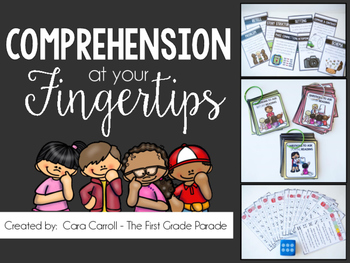
As far as comprehension skills were concerned, it was really important for me to have easy access to resources and questioning prompts so that I would be able to target various skills any time we read a book...shared reading, guided reading, etc.  I needed to be able to have things right at my fingertips.
I finally had the chance to give those resources a makeover and now I can share them with you!

I liked to keep a set of mini comprehension posters with me at all times.  I actually printed out two different sets.  One to display on my focus wall (as new skills/strategies were introduced) and then I kept one on a binder ring and placed it on a command hook next to my easel so that I'd have quick access to it...and so would my kids.  They knew they could use that resource whenever they had questions, etc.


I also kept 3 sets of questioning cards/prompts readily available...questions to ask before/after/during reading.  These were probably my most used resource in the classroom.  I kept them in my guided reading toolkit and carried that toolkit to my carpet every time I did a read aloud with the kids.  I've since added a lot of new questions to all three rings, but these were great for getting kids to think about the text in a variety of different ways.  They also include a lot of higher order thinking questions.  That was something that was really important to me.  I wanted to be able to differentiate questioning on-the-fly and these provided me with a way to do that effectively and kept me from asking the same questions over and over again.


My little comprehension dice cards were also a favorite for both myself and my kids!  Any activity with dice is always a favorite, right?!  I created a lot of different comprehension cards to target different skills and strategies and depending on what we were targeting in our instruction would determine which cards we would use.  They were great to use with our guided readers, but we also used them with our shared reading books to change things up a bit from the questioning rings and prompts.  Gotta keep 'em guessing ;)  
ANY time is a good time to work on comprehension strategies and skills and it's definitely not a part of reading we want to neglect or ignore.  If you want to grab a set of these comprehension resources for your classroom, you can find them here:


How do you target comprehension in your classroom?


Thứ Năm, 24 tháng 3, 2016

Micro-Moments for Publishers: Reach your users in their moments of intent

For a long time, we've all heard that we're perched on the edge of a new golden age of digital, like divers on a cliff.

By now it seems clear that we have well and truly jumped off that edge and are swimming, frolicking (and sometimes drowning) in that futuristic sea of digital, connectivity, cams, drones, the Internet of Things… and especially mobile.

Today, we'd like to kick off a three-part blog series that will look at how publishers can do more frolicking and less failing in this digital sea. In particular, we'll look at what we call digital moments that matter, and the best ways for publishers to think about those moments. Part one today is Micro-Moments for Publishers, to be followed by From Micro to Macro and then part 3, Acting On Your Moments.

Where to start? In an age where people create and consume their very own newsrooms on a daily basis, expectations for content are growing higher and higher. Just a few examples:


So the publishing business has changed tremendously over the last two decades, but the big questions are still very much the same:
  • How do I reach the right audience?
  • How do I make sure I stand out?
  • How do I drive enough views and revenue to grow my business?

Today you have more choice than ever in how to approach these questions, thanks in large part to huge changes in mobile consumer behavior.

We don’t 'go online' 
anymore – we
live online

There's no such thing as sitting down for an “online session” anymore. Mobile is not just a hand-held device; it is a human and consumer behavior. It's why we no longer have those empty spaces in our day -- at the bus stop, in line at a store, or even at night in bed.


As a publisher, you don't always have to be there for those moments when users browse their friends' photos and status updates, or find out that they need to pick up milk on the way home from work. In fact, if you try to insert your content when people aren’t receptive, it can do more harm than good.

But certain moments really do matter for publishers: Moments when consumers turn to their phones to seek information or ideas. In those moments they have an intent: a need that can be met, a curiosity fulfilled, or a decision made.

These countless moments are full of intent signals that publishers can capitalize on. A "time for a new one" moment with a worn-out hairdryer can be satisfied with a product review. An "I can fix it" moment is perfect for do-it-yourself articles from publishers. (Over 100 million hours of “how-to” content have been watched on YouTube so far this year.) What about “I want to watch” moments? Can you give those users short and easy-to-watch content?


"How do I reach my audience?" "How do I make sure I stand out?" The answer lies in creating the content for these micro-moments. And in the next post, we'll talk about an opportunity that's similar and yet different: macro moments.

Want to learn more about micro-moments? Check out the Think with Google Guide to Winning the Shift to Mobile.

Chris Jones
Global Audience Development Specialist


Thứ Tư, 23 tháng 3, 2016

Science of April...It's Here!

I've got a busy day ahead of me...Easter parties and spring cleaning...but I wanted to pop in real quick and let y'all know that Abby & I finished up our newest cross-curricular science resource, The Science of April, and released it yesterday (after many a technical difficulty..oof).  Here's just a tiny sample...


And here's April's pacing calendar if you're interested!  Love having an entire month's view in one organized little space.  Definitely helps keep me on track!!


If you're interested in adding this to your science resources, just click on the pic below.  Four weeks of detailed science lesson plans plus additional cross-curricular activities, too!  We always put our science resources on sale (20%) for the first 24 hours, so you can grab it through the end of the day today (Thursday, March 24th) for $12.  


To give you a little idea of what these comprehensive science resources include, here's a peek at February's....


And here are just a few things people are saying about them...

As usual, if you have any questions, feel free to ask!!!  
Have a blessed day!

Thứ Hai, 21 tháng 3, 2016

Last Minute Easter Ideas & FREEBIES!

Believe it or not, Easter is right around the corner!  I'm not sure why I thought we had more time, but just in case you missed the memo too, we don't.  We don't have much time at all.  This SUnday to be exact!  I'm in the process of helping the Easter Bunny gather lots of fun treats for the boys.  I'm glad I didn't wait to remember that until the night before.  Not that I know anything about that ;) 

I was at Michael's the other day and found these...


Of course, I had to have them.  Loved that they came 3 to a set.  I'm sure they have something similar to this at the Dollar Tree??  All I know is that I had to have these.  So I figured these would be the perfect little containers for making CVC words!!  GAH!!!  I placed letter dice in each of the rabbits and then numbered the bellies on the front of the container (that way the kids will know which letters go 1st, 2nd, 3rd in sequence).  We've seen a million activities just like this one so this is definitely nothing new.  I just love having these cute little containers to make this activity a little more exciting!  The kids will have to shake the containers, read the letters on which they land, write them in sequence on the recording sheet, and then determine whether or not the word is real or nonsense.  


Michael's also had these fun little chick containers, too.  And like any teacher would do in my situation, I picked up a set of these also.  I decided to incorporate a little math with these and so for this activity kids will be creating 3 addend equations.  Just shake all 3 containers, read the number on which you land, record the numbers, add, and solve!  I like to make sure my kids have access to seasonal manipulatives for activities like this...just in case they need a hands-on piece to help them solve their problems.


You can grab both of these recording sheets in this freebie!!!  Just click on the pic.


Speaking of math, here's a FUN activity I used the past couple of years with this great little tray I found at Wal Mart.  In true teacher fashion, I bought about 10.  I'm pretty sure I've only used 2 of them, but y'all...I HAD to have 'em.  #thestruggleisreal

I found the counters at the Dollar Tree and then labeled each of the egg sections in the tray with a number.  I had my kids toss two counters into the tray and then add the numbers together.  We also did this with subtraction and mixed operations.  It was great for literacy centers, too.  I kept the numbers in the tray and then had my kids toss one counter onto the tray.  If we were learning about the "sl" blend (for example), I'd have them toss the counter, land on a number and then find a matching number of "sl" words in the room...or create a list of 7 real/7 nonsense sl words.  Does that make sense?!


No thematic unit is complete without a fun bulletin board and these are two of my favorites!
This is the display we put up last year...inspired by Jennifer at First Grade Blue Skies.  This was one of my favorite craftivities of the year!!

We put this one up the year before and it coincided perfectly with our study of oviparous animals.  I think I've been having my kids create their own little chicks for the last 12 years!  They change a bit each year, but I typically keep the writing the same.  I always have my kids practice using descriptive words in their writing when we do this activity.  Any time we're writing about a non-fiction topic or anything that's concrete, they can write for days.  You can scroll all the way down for this writing template.


Last year we read The Easter Bunny's Assistant and then I had my kids respond to the story by writing about why they thought they would be a good assistant to the Easter Bunny.  And the responses were hilarious!!!  I paired the writing with a directed drawing activity.  Are they not amazing?!?!?  I got the idea from THIS PIN on Pinterest.  I would have LOVED for them to paint the canvas version, but at this time of the year, ain't nobody got time for that.  I don't have instructions for the directed drawing.  I just sort of came up with it as I went along.  They're SUPER simple to draw and the kids LOVED it!


We also read The Best Easter Eggs Ever and I had my kids decorate an egg and then write a letter to the Easter Bunny  persuading him to choose their egg as THE Easter egg of the season.  Too cute!


And of course, life sized whole group games make learning FUN.  Here are a couple we played the last few years.  Interactive, hands-on, and such a HOOT!!!


Now go ahead and get your freebie on!!!  


Thứ Sáu, 18 tháng 3, 2016

Now you can also earn money with Matched content


Last year we launched Matched content to help increase user engagement on your site by promoting relevant content from your site to your visitors, which may help grow your ad business as well. Starting today, you can use Matched content units to directly generate revenue by allowing ads to appear alongside your recommended content.

Matched content with content recommendations and ads

With the new “Allow ads” feature, relevant ads will appear within your Matched content units, and will be styled to complement the look and feel of your content recommendations. We'll gradually roll this feature out to all Matched content eligible publishers across the globe over the coming weeks. To enable ads, visit your My ads tab and choose “Allow ads” for your Matched content units.


Matched content is available for sites with multiple pages with unique images and high volumes of traffic. Have a look at the site management settings in your account to see if your sites are eligible and to get started with Matched content. Matched content units don’t count towards your Google content ad limit per page - to get the most out of this new tool, check the best practices in the AdSense Help Center.

As always, we'd love to hear your thoughts about this new feature in the comments section below.


 Posted by Tobias Maurer, Product Manager

Thứ Sáu, 11 tháng 3, 2016

Best practices for reviewing products you've received for free


Editor's note: This post was cross posted from the Google Webmaster Central Blog.
As a form of online marketing, some companies today will send bloggers free products to review or give away in return for a mention in a blogpost. Whether you’re the company supplying the product or the blogger writing the post, below are a few best practices to ensure that this content is both useful to users and compliant with Google Webmaster Guidelines.

1. Use the nofollow tag where appropriate
Links that pass PageRank in exchange for goods or services are against Google guidelines on link schemes. Companies sometimes urge bloggers to link back to:
    a. the company’s site
    b. the company’s social media accounts
    c. an online merchant’s page that sells the product
    d. a review service’s page featuring reviews of the product
    e. the company’s mobile app on an app store
Bloggers should use the nofollow tag on all such links because these links didn’t come about organically (i.e., the links wouldn’t exist if the company hadn’t offered to provide a free good or service in exchange for a link). Companies, or the marketing firms they’re working with, can do their part by reminding bloggers to use nofollow on these links.

2. Disclose the relationship
Users want to know when they’re viewing sponsored content. Also, there are laws in some countries that make disclosure of sponsorship mandatory. A disclosure can appear anywhere in the post; however, the most useful placement is at the top in case users don’t read the entire post.

3. Create compelling, unique content
The most successful blogs offer their visitors a compelling reason to come back. If you're a blogger you might try to become the go-to source of information in your topic area, cover a useful niche that few others are looking at, or provide exclusive content that only you can create due to your unique expertise or resources.

For more information, please drop by our Google Webmaster Central Help Forum.

Posted by the Google Webspam Team

Thứ Năm, 10 tháng 3, 2016

Viewability Spotlight for Sellers: 3 loading methods that can optimize your viewability

Our latest infographic puts a spotlight on viewability by sharing a dozen technical best practices for improving viewability based on insights from Active View, Google's MRC-accredited viewable impression measurement technology.

On this blog, we're breaking down the best practices into small, approachable chunks. Already, we've focused on 2 tips for enabling viewability measurement, 3 speedy ways to improve viewability, and 4 ways to improve ad layouts for better viewability. In this post you'll learn 3 content and ad loading methods that can optimize your viewability rates.

Here is today's recommendation:


We hope these recommendations are improving your site or apps ad viewability. Feel free to share your viewability success story in the comments section below.

Posted by Anish Kattukaran 

Thứ Ba, 8 tháng 3, 2016

Viewability Spotlight for Sellers: 4 ways to improve ad layouts for better viewability

Our latest infographic puts a spotlight on viewability by sharing a dozen technical best practices for improving viewability based on insights from Active View, Google's MRC-accredited viewable impression measurement technology.

On this blog, we're breaking down the best practices into small, approachable chunks. Already, we've focused on 2 tips for enabling viewability measurement, and 3 speedy ways to improve viewability. In this post you'll learn tips for laying out ads on a webpage or scrollable page in an app in order to improve viewability rates.

Here is today's recommendation:


We hope these recommendations are improving your site or apps ad viewability. Feel free to share your viewability success story in the comments section below.

In the next part of our Spotlight on Viewability, we'll share 3 content and ad loading methods that can improve viewability.

Posted by Anish Kattukaran 

Thứ Sáu, 4 tháng 3, 2016

Why are my earnings down right now?

Four things to explore if your AdSense earnings take a dip

Today we'd like to share some insights about why AdSense earnings sometimes go down -- and look at how to troubleshoot what's going on when that happens. Google has a variety of tools and reports that will help you see what might be causing a decline and how you can respond to optimize your earnings.


One of the first things to consider is: have your overall page views gone down, or are other issues causing the drop? There are many factors that affect revenue, but the key ones to look at include:
  • Clickthrough rate (CTR)
  • Cost per click (CPC)
  • Page revenue per thousand impressions (page RPM)
  • Page views
You can view all these metrics on the Performance reports tab in your AdSense account. Here are a few tips on how to address issues you may discover.

1. My page views have decreased

When troubleshooting changes in page views, it's a good idea to extend the date range of your reports out to 30 days or more to help identify trends or specific issues. A drop in page views could simply be seasonal; retailers, for instance, tend to see a traffic drop after the holiday season. But a decrease can also be due to a change in your content.

If your traffic has dropped, here are some ways you might increase it:

  • Promote your site with other major sites that cover the same topics.
  • Promote your site through social media, and create a group of interested people who regularly visit your site.
  • Use Google Search Console to make sure your site is being correctly crawled and indexed.
  • Update your site regularly to encourage repeat visitors. You might also want to send out an email or a newsletter about your updates.

2. My cost per click has decreased

CPC is market-driven and depends on factors like advertiser bids on keywords and the CPC values they're willing to pay. For example, CPC can fall at the beginning of each quarter when marketers are shifting budget. When looking at changes in CPC, it's a good practice to extend the date range of your reports out to a year. Then:

  • See if you're using the best-performing ad sizes. Generally, our most successful sizes for CPC and CTR are 720x90, 336x280, 160x600, and the 320x100 mobile banner. Learn more about the most successful ad sizes.
  • Make sure you're not blocking ads you don't need to. Blocks on too many advertisers, ad networks, general or sensitive categories will often decrease CPC because there are fewer advertisers in the auction bidding on your inventory. The more inventory your site has access to, the greater the chance that auction pressure will drive up your CPC.
  • Look at how seasonality can affect your advertisers' bids. For instance, swimsuit advertisers often increase their bids in the early weeks of summer. But if your site caters only to students, you should expect traffic to fall in the summer. Learn more about how the ad auction works for a clearer understanding of how these kinds of changes can impact your earnings.

3. My search rank has dropped

Deeper investigation may show you that your page is not ranked as highly in search results as it once was. The Webmaster Troubleshooter is designed to help you resolve common issues with your site in Google Search and the Google Search Console.

4. My CTR or page RPM has decreased

A drop in CTR or page RPM can be caused by confusing site design or poor targeting. Visitors who see your ads might not click on them because they find them irrelevant, or perhaps they don't see your ads at all. And that leads to lower earnings.

Here are some best practices to help drive up your CTR and page RPM:


We hope these tips will help you understand exactly what's happening on your site ― and send your earnings back in the right direction.


Posted by Rachel Barrett
Google AdSense Team

Thứ Năm, 3 tháng 3, 2016

Viewability Spotlight for Sellers: 3 speedy ways to improve viewability

Our latest infographic puts a spotlight on viewability by sharing a dozen technical best practices for improving viewability based on insights from Active View, Google's MRC-accredited viewable impression measurement technology.

Recently on the blog, we focused on 2 tips for enabling viewability measurement. In this post you'll learn tips for improving ad viewability by optimizing your apps and sites for speed and responsiveness.

Here is today's recommendation:


We hope these recommendations are improving your site or apps ad viewability. Feel free to share your viewability success story in the comments section below.

In the next part of our Spotlight on Viewability, we'll share 4 ways to improve ad layouts for better viewability rates.

Posted by Anish Kattukaran,
Product Marketing Manager

Thứ Tư, 2 tháng 3, 2016

Money, Money, Money, Money....MONEY!!!

Did you read that title the way I'm singing it right now?  
The O'Jays??  
Anyone? 
 Bueller??


So let's talk MONEY!!!

A few weeks ago I did a standards-based training that centered around teaching financial literacy concepts to our primary babies....first grade to be exact. Our district starts with introducing coins, identifying coins, and determining the value of a set of coins.  I felt like I needed to talk a bit about this concept before heading right into financial literacy because they piggyback off each other so beautifully.  SO, I wanted to give you some ideas that maybe you can incorporate into your instruction, too!  


I especially love the Welcome Books.  I like to read these books each day I introduce a new coin.  We talk about all of the characteristics of each coin and create these bubble maps.  


Once we introduce the coins and become familiar with their individual value, we start working with them through lots of different hands-on activities.  Sometimes I feel like we jump into the "DOING" so quickly that we often forget about the "THINKING".  We focus so much on the PRODUCT that we forget about the PROCESS.  

THINKING and PROCESS IS WHERE IT'S AT!!!!  Giving our kids opportunities to THINK about what they're doing and go through the PROCESS of thinking.  While the "doing" and the "product" have value as well, we really need to pay particular attention to the "thinking" and the "process".  We can learn so much about our kids through this!  

So let's talk about a few hands-on activities that engage our kids in thinking and process.  We're not just aimlessly giving them these activities so that they in turn can give us a product, rather we're engaging them in tangible activities that make them think!!!  

First up, let's talk bottle caps.  I drink A LOT of water (I recycle the bottles, so please don't throw stones ;)).  I have a weird tendency to save the caps because isn't that what teachers do?!  Save what everyone else throws away?!  All that to be said, that's what you'll need for this activity.  As many or few as you deem necessary.  You'll also need a set of coin stickers.  These are my favorite.


Now all you'll need to do is adhere the stickers to the tops of the bottle caps.  You can even use a Sharpie on the underside of the cap to label the value of each coin (if you want this to be a self-checking activity...a great option to give our reluctant risk takers reassurance and our struggling learners a way to check their thinking).


SO how can these be used for learning?!  Well let me share a few ways we can take one idea and differentiate it to meet the needs of the various learning abilities in our classes.  

BOTTLE CAP GRAB AND GRAPH

Place the coin bottle caps in a large container bucket.  Prompt students to reach in the container/bucket and grab a handful.  Students can sort the caps by coin (penny/nickel/dime/quarter),tally the amount in each set, and then graph.  As an added challenge, prompt students to identify the value of each set in their grab.  How much is the total value of pennies you grabbed?  How much is the total value of nickels?? Dimes?  Quarters??  How much is the TOTAL VALUE of coins altogether?
Of course, if your students aren't ready to find the value of a set of coins, they can simply identify, sort, tally, and graph.

https://drive.google.com/file/d/0B6zC45cAimWuTks0TGNtXzJfcms/view?usp=sharing

Have y'all seen these at the Dollar Tree?!?!  They're bag clips!!!  And precious ones at that.  
Of course, my teacher brain immediately went to comparing numbers.  These come in a set of three and, of course, are only $1.  Naturally I needed ALL of them, LOL!!!  


I brought them home and used them for this variation on the bottle cap counting.

BOTTLE CAP COIN COMPARISONS

Prompt students to reach into the coin cap bucket/container and grab a handful of coins.  Count the coins in the set to determine the total value.  Now grab ANOTHER handful of coins, count them, and find the total value.  Use the alligator clip (or a simple index card labeled with the greater than/less than symbol) to determine the set with the greater value.

This would be a great partner game.  Partner 1 grabs, counts, and finds the total value.  Partner 2 grabs, counts, and finds the total value.  Partners compare their total values and determine who has the set of coins with the greatest value.  The partner with the greatest amount wins the round.  You can determine how many rounds each set of partners can play.  The partner who wins the MOST rounds, wins the game.  Fun and meaningful.   Our kids have a great time "playing" while practicing important standards-based skills and making meaningful connections to learning in the process.

Now keep out your stickers and grab a stash of craft sticks!!!  Let's do a little DIY to make learning hands-on and FUN!

This activity is SUPER simple to make.  Again, you'll need a set of craft sticks, coin stickers, and a blank set of round stickers (garage sale dots).

Basically, you'll just adhere a set of coin stickers to the craft sticks.  Any amount is fine, just so long as you leave space on the opposite end of the stick to adhere the garage sale dot.  I'm hoping that makes sense, LOL!!!  Label the garage sale dot with a coin amount. Make sure to adhere a matching amount of coin stickers to a different stick so that you can match the  $ label to the coin stickers.  This is played just like the game of dominoes, but with coins.  I would recommend using the large craft sticks.  THe stickers will still slightly go past the edges, but they work great!  

This makes a great small group or independent activity (<----especially fast finishers!!!!)

Once the novelty of the dominoes wears off, repurpose those same sticks for a completely different activity, but still focusing on the same concept. 


Place the coin sticks in a container (Crystal Light containers are PERFECT for this!!!).  Now prompt your students go grab a die and roll.  Students will grab a matching amount of coin sticks.  (If student rolls a 5, he will grab 5 coin sticks).  

Students can use the sticks they grab for a couple of different activities.  

Idea #1 --->  Prompt students to count up the value of each coin and then place the sticks in order from the least to the greatest or greatest to least.

Idea #2 ----->  Prompt students to find the TOTAL VALUE of all sticks combined.  

Idea #3 (see below)


Have students roll the die and collect a matching amount of sticks and then find the total value.  Set aside.  Roll the die again, count out a matching set of coin sticks, and find the total value.  Now take one of those bag clips I showed you earlier and use it to compare the sets.  Which set of coins has the greater total value?  Least?  

This would also be a great partner game.  Roll, collect, find the total value.  Which partner has the greatest total value?  Super simple and easy!  To make this a more successful independent activity, you can use a Sharpie to write the total value on the back of each stick. 


Let's keep out those craft sticks for another fun counting activity.  This one was inspired by Denise Boehm at Sunny in Second Grade.  I've always loved her Popsicle Place Value activity and have used it in my classroom for several years now.  This is almost the exact same concept, but this activity incorporates coins.

Grab a set of 10 craft sticks.  On five of the craft sticks, draw ten dots on one side and one dot on the other side.  On the other five of the craft sticks, draw five dots on one side and one dot on the other side.  SO, you will have a set of 10 sticks total...five sticks will have ten dots on one side and one on the other and five sticks will have five dots on one side and one dot on the other (see the top left picture).  

Place the sticks in a container  (again, a Crystal Light container would be perfect for this!!!).  Prompt students to shake the container and then spill, pouring out all of the sticks.  The sticks will fall where they may.  Some sticks will land on the side with ten dots, some with five dots, and the others will land on the side with one dot.  Prompt students to sort accordingly (again, refer to the top left pic).  

NOW...prompt students to match the dot amount to the coin amount. Make sure you have a set of coin manipulatives on hand for this activity!!!!!!  (I will link to my favorite after I explain.)  As you can see in the bottom left picture, there are two sticks with 10 dots, so we matched those two sticks to two dimes.  There are five sticks with five dots, so we matched each one to a nickel.  Then there are three sticks with one dot each, so we matched those to one penny each.  

NOW...we can trade some of these coins in, right?!  RIGHT!!! (top right picture)
We'll keep the two dimes.
We have 5 nickels, so we can trade some of them in for dimes.  We can trade in four nickels for two dimes.  Now we have four dimes altogether and one nickel.
We'll keep the pennies, too.

(BOTTOM RIGHT PIC)
Let's go a further.
We can combine the two dimes and the nickel to give us 25 cents.  Let's trade those in for a quarter.  
We'll keep the two dimes and the three pennies.
What's our total amount?!  

This is a GREAT small group activity!  It could even be done in a whole group setting with you as the moderator thinking aloud as you demonstrate the trade-in process.  You might even consider displaying this on the white board through your document camera so that you can insure that all of your kids can see exactly what you're doing as you think aloud and talk through the process.

Whew!!!  Lots of fun!!!!


Now here are the coins I mentioned earlier.  These are my absolute FAVORITE!!!!  I love them because they don't have COPY written across them, they're life-sized, and they "feel" like real money.  


Not only do I use these for manipulatives, but I have extra sets I use for our favorite small group coin counting game...BANKRUPT!!!!


You'll need craft sticks, coin manipulatives, hot glue, and a sharpie.  

Hot glue a set of coin manipulatives to a craft stick.  You determine how many/total value/etc.  There's really no rhyme or reason. Whatever fits, LOL!  I like to glue my coins on the sticks the same way I teach my kids to count them...I start with the coins with the greatest value and descend to the least.  Now label a set of craft sticks with the word BANKRUPT!  Place all the sticks in a container.

If you're familiar with the sight word game BANG!, then you already know how this is played.

Starting clockwise, prompt the first player to reach into the container, grab a stick, and identify the total value.  If he is able to correctly identify the total value of the coins on the stick, he keeps the stick.  If not, the stick returns to the container.  Now move onto the next player and the next giving them each a turn to identify the total amount of coins on the sticks.  

If the player pulls a BANKRUPT stick, he has to return ALL of his sticks back to the container. The player with the most sticks at the end of the game, wins!  (You determine how long you play :))

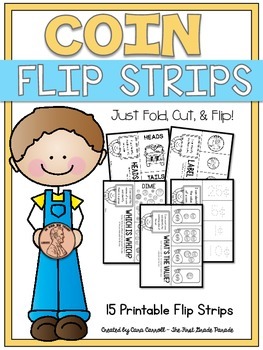
Now how's that for lots of DIY coin counting activities?!  I really do hope you can use them in your classroom!  If you're looking for more coin counting activities, I just released a supplemental Coin Counting resource.

Here's a PREVIEW of what's included...


And if you're looking for a few more supplemental coin counting resources, here are my most favorites!


Check back tomorrow because I'll be sharing LOTS more ideas to help you kick off your Financial Literacy unit!!!  Some great, hands-on, engaging activities...mentor texts...and lots more!!!  Even if this is a unit you've already covered this year, the activities I'm going to share would be great for reinforcement and review or even just to keep in your file for next year :)  

In the meantime, you can also check out my newest Financial Literacy resource just released today!

Hope you're having a GREAT day!!!!